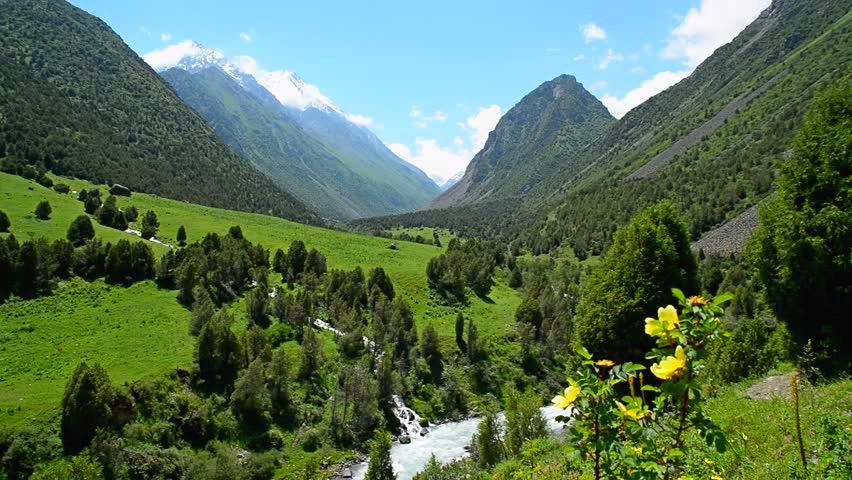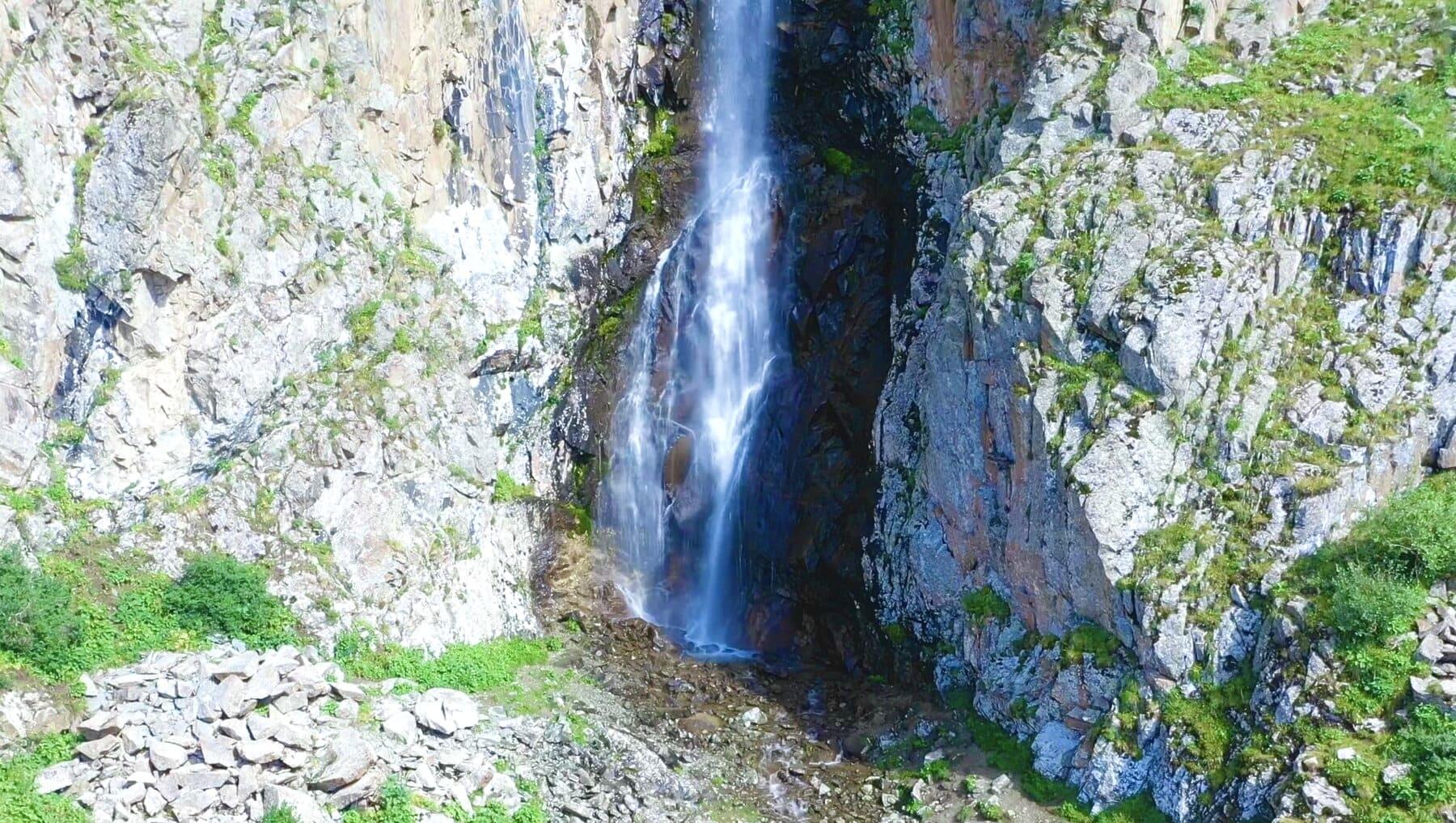
Above the wooded slopes of Ala-Archa, the valley opens towards rock faces and mountain ridges. The city feels far away. Follow the rising trail into the Ak-Sai Valley and, when the waterfall is flowing, a silver ribbon of water appears against the dark stone.
Ak-Sai Waterfall, also written Ak-Say Waterfall, is a rewarding hiking destination in Ala-Archa National Park near Bishkek. The walk is as much a part of the experience as the waterfall itself: changing views, open slopes and the feeling of moving deeper into the mountains.Choose it for an active day outdoors rather than a quick roadside visit. You will need time for the climb, pauses along the way and a careful descent.
Ak-Sai Waterfall hike at a glance
| Planning question | What to expect |
|---|---|
| Location | Ak-Sai Valley, Ala-Archa National Park, south of Bishkek |
| Route type | Usually an out-and-back walk |
| Walking distance | Approximately 8–9 km return from the usual upper visitor/trailhead area |
| Elevation gain | Approximately 650–700 m, depending on the route |
| Suggested walking allowance | Around 4–6 hours with breaks; longer in difficult conditions |
| Difficulty | A sustained uphill hike requiring reasonable fitness and secure footing |
| Main appeal | Mountain scenery, valley viewpoints and the seasonal waterfall |
| Essential checks | Trail conditions, weather, park access and return transport |
The time allowance is a planning suggestion, not a target pace.
Where is Ak-Sai Waterfall?
The waterfall lies in a side valley within Ala-Archa National Park, in the mountains south of Bishkek.
There are three separate stages to plan:
1. Travel from Bishkek to the park.
2. Reach the appropriate walking start inside the park.
3. Hike to the waterfall and return.
Do not confuse the park entrance with the trailhead. Your transport arrangement should explain where you will be dropped off and how you will complete the internal journey.
This destination is also different from Ak-Say Canyons beside Issyk-Kul. Include “Ala-Archa” when searching for the waterfall or sharing a map pin.
What makes the walk special?
The route gives you a gradual introduction to the mountain landscape. Take time to look back as you climb: the valley changes shape, foreground slopes reveal distant ridges, and the view becomes wider with each section.
The waterfall provides a clear walking objective, but it is not the only reason to come. A pause on a suitable section of trail can be just as memorable as the final viewpoint.
Water volume varies with the season and conditions. In lower-flow periods, treat this primarily as a mountain walk with a waterfall destination rather than expecting the same powerful cascade shown in every photograph.
The hiking route: what to expect
Start with the correct trail
At the walking area, confirm the route towards Ak-Sai Waterfall. A lower valley walk and the uphill waterfall route are different outings.
Download a map before departure and check current signs or local advice. Do not follow another group simply because they appear to be heading into the mountains.
Settle into the ascent
Begin at a pace you can maintain. The elevation gain makes this more demanding than an easy city walk, even when the trail is dry.
Use pauses to enjoy the view and assess how everyone is feeling. If the ascent is already tiring early in the day, choose a shorter objective while you still have enough energy for the return.
Enjoy the viewpoints
Broken Heart and Tepshi are names you may encounter in descriptions of the approach. Use a current route map to understand which points your chosen path passes.
Stop where there is room for others to get by. A secure place on the trail is preferable to a narrow edge, even if stepping further out appears to improve the photograph.
Approach the waterfall carefully
As you reach the waterfall area, choose a stable viewing position. Spray, wet stones and loose ground can make the final approach less secure than it looks.
You do not need to stand directly beneath the water. A wider view often captures the waterfall and surrounding cliffs more effectively.
Return with time to spare
For a standard waterfall outing, return along your planned approach.
The descent deserves attention: tired legs and uneven ground can make it slower than expected. Keep enough daylight and allow time to reach your agreed transport connection.
How difficult is Ak-Sai Waterfall?
Published guides use different difficulty labels. A more useful description is a mountain hike with a sustained climb and a significant descent.
In dry conditions, it can suit walkers with reasonable fitness who are comfortable spending several hours on uneven paths. It should not be presented as effortless or suitable for everyone.
Consider a shorter walk if:
For children, assess their walking experience rather than age alone. The route is not a pushchair walk, and visitors with mobility needs should ask about suitable lower-level alternatives.
Ak-Sai Waterfall or Ratsek Hut?
The waterfall is a complete day-hike objective in its own right.
Ratsek Hut is a separate, higher destination requiring additional ascent, time and preparation. Do not treat it as a small extra stop because a sign or map shows the trail continuing uphill.If the waterfall is your plan, turn back according to that plan. A hut visit, overnight stay or route towards the glaciers should be organised separately, with appropriate equipment and current information.
Best time to visit
Summer walking
Summer is a practical season to consider for the hike, but mountain conditions still need checking. Bring rain protection and a warm layer even when Bishkek feels hot.
An early departure gives you more flexibility for breaks, internal park transport and changes to the route.
Spring and autumn
These seasons can offer rewarding scenery, but snow, ice or wet ground may affect the trail.
Check the conditions at walking altitude, not only the forecast for the city. Water flow can also be lower later in the season.
Winter
A frozen waterfall is a different kind of mountain outing. Icy paths, falling ice and winter terrain require a separate assessment.
Do not assume that normal walking shoes or a summer route description are enough. Seek current local advice and avoid standing beneath frozen formations.
Ice climbing is a specialist activity, not an informal extension of a sightseeing visit.
Getting there from Bishkek
Join a guided Ala-Archa day hike
If you would like help with transport, route finding and pacing, explore our Ala-Archa National Park day hike from Bishkek. The tour includes an Ak-Sai Waterfall hiking itinerary, with a guide to help you make the most of the walk.
Share your hiking experience and preferred pace when enquiring. Confirm the day's route, pickup arrangements and included services before booking, especially if weather or trail conditions require a shorter walk.
Private transfer or driver
A private transfer can simplify the day if you agree on the full arrangement in advance.
Ask:
Send the exact pickup location and keep your driver’s details saved offline.
Taxi
A taxi can cover the road journey, but it does not automatically solve park entry or internal transport.
Arrange the return before walking. Do not rely entirely on finding a vehicle or getting an app booking immediately when you finish.
Public transport
Check current services towards Ala-Archa, including departure points and return times.
Allow extra time for connections inside the park. A cheap journey is only useful if its schedule leaves enough time for the walk and the return.
Manas Airport transfers and your hiking plans
Arriving in Kyrgyzstan before your mountain adventure? Our Manas Airport transfer service can help you arrange the journey to your Bishkek accommodation. Rest, prepare your walking gear and head to Ala-Archa with time to enjoy the following day.
If you prefer to travel towards Ala-Archa directly from the airport, enquire with your flight number, arrival time, passenger count and luggage details. Ask whether the plan leaves enough daylight for your chosen walk and how luggage, park access and the return journey will be handled.
An airport transfer covers the agreed road journey; guiding, park admission, internal transport and waiting during the hike should be confirmed separately.
Park entry and internal transport
Ala-Archa’s visitor transport arrangements have changed in recent years, including restrictions affecting conventional vehicles and the use of electric transport.
Check the current arrangements before travelling. Older descriptions that tell every visitor to drive straight to the traditional hiking start may no longer match the visit you can make.
If you plan to use a cable car or another service, confirm its operating status and how its access point connects with your intended walking route. Do not apply the full-route hiking figures automatically to a different starting point.
For orientation, consult the Ala-Archa park map.
Entrance fees and trip costs
Confirm current park charges rather than relying on an old fare quoted online.
When comparing a guided trip with an independent visit, check whether the price includes:
Carry a suitable payment method and some local cash. Agree on the total before departure, especially when waiting time or additional services are involved.
What to bring
Prepare your food and water before leaving the visitor area. Do not assume there will be supplies available along the waterfall trail.
Photography and enjoying the landscape
For a varied set of photographs, look beyond a close-up of the falls.
Try a broad valley view on the ascent, a photograph showing the trail within the landscape and a waterfall image that includes the surrounding rock.
Clouds can soften the light, while patches of sun bring out the folds of the hills. Let conditions guide your photographs rather than waiting beside an exposed edge for a particular shot.
Protect your camera from spray and stop walking before looking through the lens. Give wildlife space and do not feed animals to bring them closer.
A suggested day plan
This is a flexible outline rather than a fixed timetable.
Morning: leave Bishkek with enough time for park entry and the internal journey. Check the weather and route before starting. Ascent: walk steadily, take short breaks and reassess progress. Use your agreed turnaround time even if the waterfall is not yet in sight. Waterfall stop: enjoy the view and eat in a suitable place away from unstable ground and the water. Afternoon: descend carefully, return to the transport meeting point and allow a buffer before any evening plans.Avoid placing a flight or another time-critical commitment immediately after the hike.
Shorter alternatives
If the waterfall route does not suit the day, choose an appropriate lower-level walk in Ala-Archa.
A shorter outing can still provide mountain scenery, fresh air and time beside the valley without committing to the full ascent.
Ask about a route that matches the least confident walker in your group. Turning back early can be the right decision, especially when weather or footing changes.
Frequently asked questions
How long is the Ak-Sai Waterfall hike?
The conventional route is approximately 8–9 km return, with around 650–700 m of ascent. The total depends on your exact starting point and path.
How many hours should I allow?
For planning, allow around 4–6 hours including breaks, with additional time for transport and park access. Difficult conditions or a slower pace can require longer.
Can beginners do it?
Some fit beginners may find it manageable in suitable conditions, but it is a sustained mountain climb. Start conservatively and consider a guide or shorter route.
Do I need a guide?
A guide can help with route choice, pacing and unfamiliar conditions. Independent walkers should be comfortable navigating, checking weather and arranging their return.
Can I visit without hiking?
The conventional waterfall visit requires walking uphill. Do not assume a vehicle or visitor service takes you directly to the falls.
Is the waterfall always powerful?
No. Flow varies, and late-season visits may have less water. The valley scenery remains an important part of the outing.
Can I continue to the glacier?
That is a separate mountain objective. Do not add glacier travel to a waterfall walk without the skills, equipment and planning it requires.
Is this the same place as Ak-Say Canyons?
No. Ak-Sai Waterfall is in Ala-Archa near Bishkek. Ak-Say Canyons are beside Issyk-Kul.
Plan your Ak-Sai Waterfall hike
Tell us your travel date, pickup point, number of guests and hiking experience. Mention whether you want the full waterfall walk or a gentler visit to Ala-Archa.
Contact GuideBook on WhatsApp to enquire about transport and a suitable hiking plan. Confirm availability, included services, the total price and cancellation conditions before booking.