


What Is Kok-Boru? Kyrgyzstan’s Traditional Horse Game
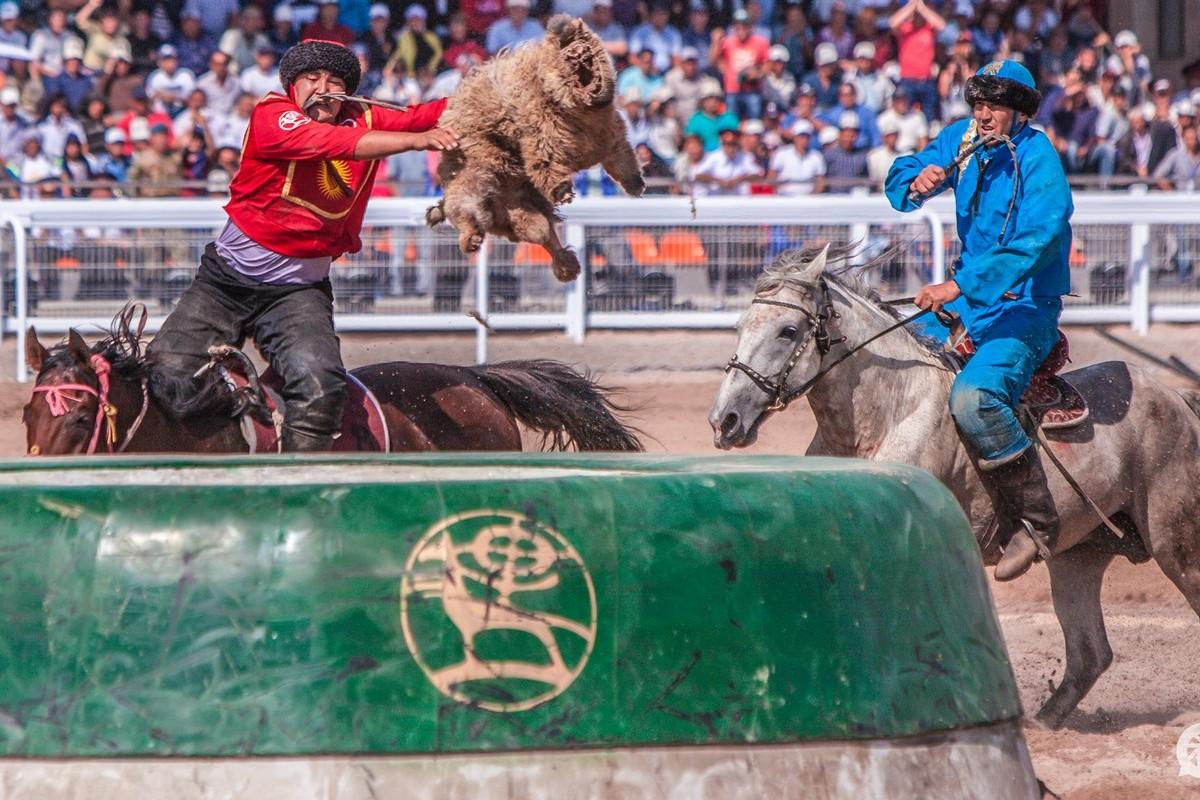
Kok-boru is a traditional Kyrgyz team sport played on horseback. Riders compete to take possession of an ulak, traditionally a goat carcass, and carry it to the opposing team’s goal, called a taikazan. Some modern games use an artificial substitute. The side with more valid goals wins. You may also encounter the spellings kok boru, kök börü and көк бөрү, as well as the name ulak tartysh. These terms are useful when looking for local match announcements or asking a host about the sport. At first, a match can look like a crowd of horses moving around one contested object. Watch for a little longer and the contest becomes easier to read: a rider gains possession, teammates move into position, and an opening briefly appears towards the goal. The excitement comes from how quickly that opening can close. Kok-boru is sometimes described to foreign visitors as “goat polo”. That phrase hints at the horseback setting but misses an important distinction: players do not use polo mallets. They must control the ulak while riding and dealing with opponents. For a first-time spectator, begin with three questions: who has possession, which goal are they attacking, and where are their teammates? Following those details makes the action much more understandable than watching only the busiest cluster of riders.
Kok-Boru Rules: Players, Goals, Match Length and Scoring
In the organised format described by the World Nomad Games, four riders from each team are on the field at a time. The squad is larger, with the overview describing 12 riders and 12 horses per team. Do not confuse the number registered for the competition with the number actively playing. The aim is to put the ulak into the opponents’ taikazan. Think of the taikazan as a substantial circular goal structure, rather than a football net or simply an unmarked patch of ground. A beginner’s way to follow a possession is: contest the ulak, secure it, move towards the opposing goal, and attempt to score. Watch the referee’s decision rather than assuming every throw towards the target counts. How long does a match last? Competition regulations matter. The World Nomad Games overview describes three 20-minute periods. However, the English federation rulebook linked from that page specifies three 15-minute periods, with 10-minute intervals, and states that playing time may vary by competition. Check the regulations for the match you plan to attend. Breaks and stoppages also mean the visit lasts longer than the playing time alone. What counts as a goal? The linked rulebook requires the ulak to enter the taikazan sufficiently: it describes full entry or at least two-thirds entering. An object left on the rim or one that enters and then flies back out does not automatically count. Close attempts are therefore worth watching through to the official decision. Is everything allowed? No. The same rulebook regulates contact, substitutions and dangerous actions. It prohibits riding into a player who is picking up the ulak. Physical intensity does not mean the match is without rules. To understand tactics, occasionally look away from the rider carrying the ulak. Notice which teammate offers support, who stays near the goal, and how the group responds when possession changes. This is a more rewarding way to watch than treating every close contest as an isolated struggle. The spectator summary here is an introduction, not a replacement for the event’s regulations. Official English rules: https://worldnomadgames.org/wp-content/uploads/2026/04/Kok-Boru-rules-en.pdf